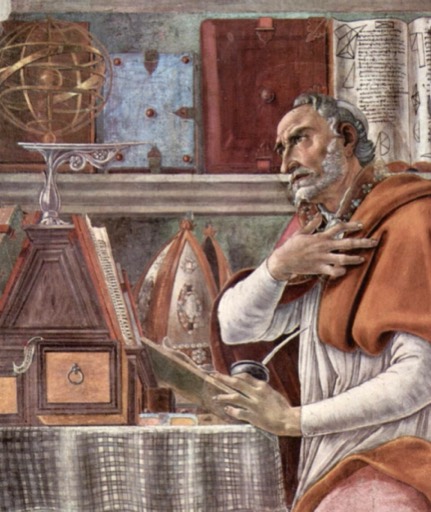
Golden Age of the Fathers (325–600)
Augustine
354 – 430 · Thagaste & Hippo, North Africa · Bishop of Hippo, greatest Western theologian
A restless North African rhetorician who tried Manichaeism and skepticism before grace found him in a Milanese garden — a child's voice chanting 'take up and read' — Augustine became bishop of Hippo and the most influential theologian in Western history. His Confessions invented spiritual autobiography; The City of God answered Rome's fall with a theology of history; his treatises on the Trinity, grace, and the church set the agenda for a thousand years of thought. He preached almost daily to ordinary dockworkers and farmers, and died in 430 while the Vandals besieged his city, the penitential psalms posted on his wall.
His Confessions, addressed entirely to God yet published for everyone, essentially invented the genre of spiritual autobiography.
Augustine has 2,239 commentary entries in HolyStudy’s verse-by-verse Church Fathers commentary. Open any Gospel chapter, tap a verse, and choose the Church Fathers tab.
Open the Bible readerImage: Wikimedia Commons · Sandro Botticelli · Public domain